You Don't Have to Accept Being Exhausted All the Time: Here's How to Get Your Energy Back
Let me guess—you got maybe 5 or 6 hours of sleep last night. And even that wasn't great sleep, was it?
Your energy levels hover somewhere between "barely functioning" and "is it acceptable to have coffee at 3 PM?" You've tried the supplements. You've done the diet changes. Maybe you've even invested thousands in functional medicine testing, bioidentical hormones, or that infrared sauna membership.
And yet… you still wake up exhausted. You still snap at your kids over small things. You still feel like you're operating at 60% capacity on your good days.
Here's what I need you to hear: This is NOT normal, and you don't have to accept it as "just part of being a parent."
The Truth No One's Telling You
While 76% of adults deal with chronic health conditions—anxiety, exhaustion, depression, autoimmune issues, adult ADHD—that doesn't make it normal. It makes it common. There's a huge difference.
And here's the part that might surprise you: the reason you still feel terrible despite trying everything isn't because you haven't found the right supplement or diet yet.
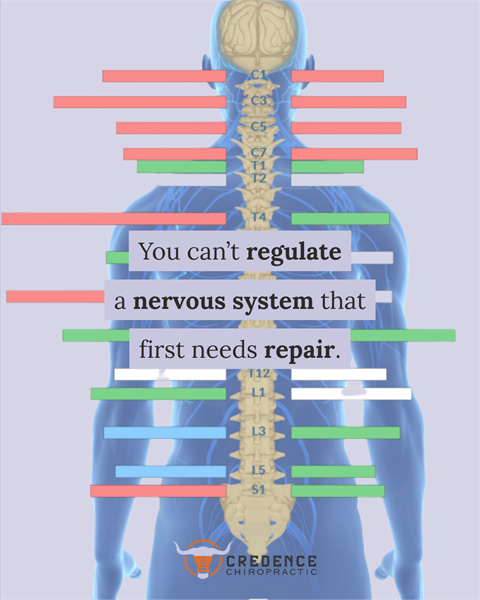
It's because no one has addressed the foundation—your nervous system.
Why Everything You've Tried Has Fallen Short
Think about it this way: Would you remodel a house built on a cracked foundation?
You could paint the walls (supplements), buy new furniture (diet changes), update the kitchen (therapy, meditation, spa treatments)—but until you fix the foundation, nothing works right. Doors won't close. Cracks keep appearing.
Your nervous system is that foundation. And when it's stuck in survival mode, no amount of external fixes will make you feel whole again.
Here's what's really happening inside your body:
Your Nervous System Has Two Settings
The Gas Pedal (Sympathetic): This is your "fight or flight" mode. It's designed to keep you alive when you're in danger—it increases your heart rate, diverts blood away from digestion, and puts you on high alert.
The Brake Pedal (Parasympathetic): This is your "rest, digest, and heal" mode. This is when your body actually repairs itself, balances hormones, strengthens immunity, and gives you deep, restorative sleep.
These two systems are supposed to work together—gas pedal when you need it, brake pedal when you don't. Up and down. That's balance.
But here's what happened to you as a parent...
The Perfect Storm That Broke Your Nervous System
It started before your kids were even born. Maybe fertility challenges. A high-stress pregnancy. A traumatic birth with interventions you didn't plan for.
Then came the real work:
- Years of sleep deprivation (not one bad night—months or years of it)
- Constant hypervigilance (always listening for the baby monitor, always watching)
- Physical demands that never let up (carrying kids, nursing, chasing toddlers)
- Work stress, household mental load, relationship strain, financial pressure
- Maybe caring for aging parents on top of everything else
Your nervous system has been operating in survival mode for YEARS.
And here's the kicker: Your nervous system doesn't distinguish between life-threatening danger and chronic daily stress. To your body, a toddler tantrum in Target triggers the same response as being chased by a bear.
Gas pedal. Gas pedal. Gas pedal.
When does the brake pedal get to work? Maybe for a few minutes at night after the kids are asleep—but by then, you're so wired you can't actually relax.
What This Creates: You're Wound Up AND Worn Out
When your nervous system gets stuck in this imbalanced state, it's called nervous system dysregulation—or more specifically, dysautonomia.
This is the hidden root cause that doesn't show up on blood work.
Here's what it looks like in real life:
✗ You're exhausted but can't sleep—your body is screaming for rest, but your nervous system won't let you downshift
✗ You're anxious but can't focus—your mind races with worry, but you can't concentrate on what's actually in front of you
✗ Your digestion is a mess—bloating, gas, constipation, reflux (because when your body thinks it's running from danger, it shuts down "non-essential" functions like proper digestion)
✗ You get sick constantly—your immune system is suppressed because all your resources are going toward survival mode
✗ Your emotions are all over the place—you have a shorter fuse because your nervous system has no "slack" left
✗ You can't balance your hormones no matter what you try—stress disrupts everything from thyroid to cortisol to sex hormones
The Root Cause Hidden Beneath It All: Subluxation
So what's actually causing this nervous system dysfunction?
The underlying culprit is something called subluxation—neurological interference that creates stuck stress patterns throughout your nervous system.
When subluxation occurs:
- Your nervous system shifts into sustained sympathetic overdrive (gas pedal stuck down)
- Your vagus nerve and parasympathetic "brake pedal" get suppressed
- Your body adapts to nonstop tension, and illness becomes your baseline
- Your ability to regulate and respond to stress becomes compromised
This is why you can eat all the right foods, take all the supplements, do all the yoga, and still feel terrible.
Because the master control system coordinating everything—your nervous system—is malfunctioning.
Why Your Labs Don't Show What's Really Wrong
Here's the frustrating truth about conventional and even functional medicine testing:
Conventional blood work barely scratches the surface and usually ends with prescription medications that mask symptoms.
Functional medicine labs ($2,000-$5,000) look much deeper than conventional testing—but they still can't directly measure subluxation, dysregulation, or dysautonomia.
Why? Because they're measuring chemistry and physiology—but those are controlled by neurology.
Your neurotransmitters and hormones are doing exactly what their names suggest—transmitting messages for your nervous system. The core dysfunction is in the system itself, not just in the chemical messengers.
The Test That Finally Reveals What's Really Going On
This is where INSiGHT Scans come in—specialized neurological assessments that measure your nervous system function directly.
These three scans work together to show you exactly what's happening:
1. NeuroThermal Scans reveal how subluxation affects your autonomic functions—digestion, immune function, hormones, and sleep. This scan explains why you have chronic digestive issues despite trying every diet, or why your hormones won't balance, even with supplements.
2. NeuroSpinal EMG Scans measure tension patterns, imbalances, and nervous system exhaustion. Most stressed parents show scores 3-4 times higher than normal—your nervous system is working overtime just to keep you functioning. This explains why you snap at your kids and can't think straight.
3. Heart Rate Variability (HRV) Scans show whether you have any "reserve capacity" or battery power left. Most parents' scans reveal they're stuck on the gas pedal with barely any brake pedal function—neurological exhaustion at its finest.
These scans look deeper than any lab work can, revealing the subluxation and dysregulation patterns keeping you stuck.
You Can Feel Like Yourself Again—Here's How
The beautiful truth? Your nervous system has an incredible capacity to heal and rebalance when given the right support. Not more support—the right support.
That's where Neurologically-Focused Chiropractic Care comes in.
And no, this isn't about back cracking or pain relief. This is completely different and exactly what we do at Credence Chiropractic.
We use those INSiGHT Scans to identify exactly where subluxation is creating interference, then use precise, focused adjustments to:
- Release stuck sympathetic stress (ease up the gas pedal)
- Restore and stimulate parasympathetic function (get the brake pedal working again)
- Activate your vagus nerve (help your nervous system actually regulate)
Here's What Healing Looks Like
As subluxation and dysregulation fade away, something amazing happens:
Your sleep improves because your nervous system can finally downshift at night.
Your digestion heals because blood flow returns to your gut, and your "rest and digest" system can function.
Your immune system strengthens because you're not constantly suppressing it with stress.
Your emotional regulation improves because your nervous system has buffer capacity again—you can handle the toddler tantrum without losing it yourself.
Your energy increases because your body isn't burning through resources just to maintain survival mode.
And here's the part that matters most: Your family needs you regulated, not just present.
Your children borrow calm from your nervous system before they can create it on their own. When your nervous system is supported and adaptable, your kids regulate more easily, stress doesn't hijack the day, and everything starts to feel lighter.
This Isn't About Adding More to Your Plate
You don't need another self-care routine to squeeze into your already packed day.
You need to fix the foundation so everything else can finally work the way it's supposed to.
The time is now to give Credence Chiropractic a call and schedule a consultation. You deserve to feel good in your own body again. Not someday when the kids are older. Not when life slows down (spoiler: it won't).
Now.
Because this exhaustion, this anxiety, this feeling of being wound up and worn out all the time—it's not normal. It's not "just part of parenting."
It's nervous system dysfunction. And it can be healed.
If you are not local to us, check out the PX Docs directory to find a PX Doc near you.
Your body is capable of so much more than survival mode. Let's help it remember how to thrive.