Addressing Scoliosis in Adolescents With Chiropractic Support
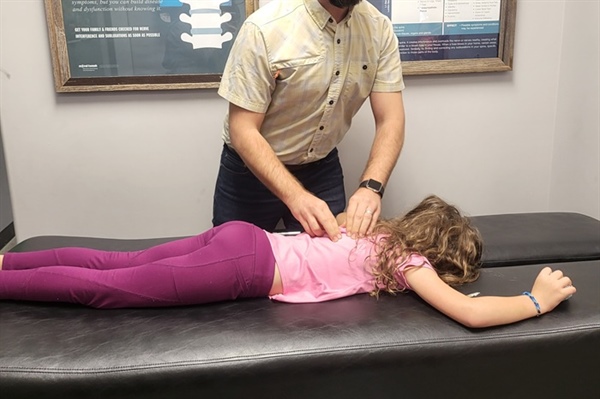
Adolescence is a time of transformation–from hormone changes to rapid growth spurts. Unfortunately, these rapid growth spurts and changes can sometimes lead to unexpected structural changes in the spine. Scoliosis–an abnormal sideways curvature of the spine–most commonly appears during these formative years.
While this diagnosis can feel overwhelming for both the child and the parent, taking a proactive approach that combines traditional monitoring with neurological chiropractic support can help manage symptoms and promote a healthy, active lifestyle.
What is Scoliosis?
Scoliosis is defined as a sideways curvature of the spine that measures greater than 10 degrees, often forming a “C” or “S” shape. While a healthy spine has natural curves when viewed from the side, it should appear straight when viewed from the front or back.
It is important to understand that scoliosis is more than poor posture. It is a structural condition where the vertebrae themselves can tilt and rotate. This rotation can cause the ribs or shoulder blades to protrude more on one side than the other, often leading to muscle imbalances and discomfort.
Who Does Scoliosis Affect?
Scoliosis affects an estimated 2% to 3% of the U.S. population, approximately 7 million people. While it can occur at any age, the most common form is Adolescent Idiopathic Scoliosis (AIS).
While mild scoliosis affects boys and girls equally, girls are nearly 10 times more likely to experience a curve that progresses to the point of needing clinical intervention. Genetics also plays a factor in scoliosis diagnosis, as about 30% of cases have a family history of the condition. Finally, most cases of scoliosis are diagnosed between the ages of 10 and 15.
Why Are Adolescents Prone to Scoliosis?
The term “idiopathic scoliosis” means the exact cause is unknown, but the reason it surfaces in teenagers is no mystery: rapid growth spurts.
During puberty, the skeleton grows at an accelerated rate. If the growth plates in the vertebrae do not grow at the same speed, or if there is underlying neurological stress, the spine can begin to curve and twist as it expands.
Because the bones, muscles, and ligaments are all growing at different rates, the body sometimes struggles to maintain symmetry. This makes the growth window (ages 10-16) the most critical time for monitoring, as this is when the curves are most likely to progress.
How Can Credence Chiropractic Support Scoliosis Diagnosis?
At Credence Chiropractic in Georgetown, TX, we believe that managing scoliosis requires a focus on the nervous system, which controls the muscles that hold your spine in place. We don’t just address the spinal curve; we look at the why behind the body’s compensations and treat those as well.
Some of the ways we can monitor and help support patients with scoliosis include:
Schedule Your Child’s Assessment Today with Credence Chiropractic
For highly compassionate and expert chiropractic care in Georgetown, TX, reach out to Credence Chiropractic. We provide whole-family chiropractic care, providing your family with holistic ways to stay healthy and active.
If your child is complaining of back pain, don’t wait to set up an appointment. Constant pain can be a drain on a child or teenager, causing headaches, sleepless nights, and other issues. Let our team provide a thorough examination and recommend a course of treatment.
Schedule an appointment or contact our office at 512-887-1477 for more information.